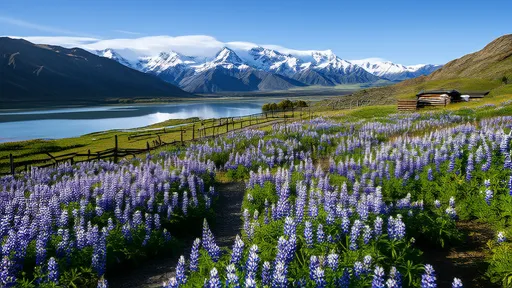
The South Island of New Zealand transforms into a breathtaking canvas of purple every November, as the vibrant lupin flowers bloom across its landscapes. These wildflowers, though not native to the region, have become an iconic symbol of the Kiwi summer, drawing photographers, travelers, and nature enthusiasts from around the world. The sight of endless stretches of lupins framing glacial lakes, rivers, and mountain backdrops is nothing short of magical.
Lake Tekapo is perhaps the most famous lupin-viewing destination, where the flowers create a striking contrast against the turquoise waters and the Church of the Good Shepherd. The Mackenzie Basin, with its wide-open spaces, becomes a sea of purple, pink, and blue hues as the lupins flourish. Further south, Lake Pukaki and the Ahuriri River Valley offer equally stunning displays, with the flowers often growing in dense clusters along the waterways.
The lupins, originally introduced from North America, have thrived in New Zealand’s South Island due to the ideal growing conditions—ample sunlight, well-drained soils, and the temperate climate. While some conservationists argue that they are an invasive species, there’s no denying their visual appeal. For travelers, the lupin season is a fleeting spectacle, typically peaking from mid-November to early December, depending on weather patterns.
One of the best ways to experience the lupin fields is by taking a road trip along State Highway 8, which winds through some of the most picturesque regions of the South Island. Stops at Twizel, Omarama, and Burkes Pass reveal hidden pockets of lupin-covered meadows, often with fewer crowds than the more popular Lake Tekapo. Early mornings and late afternoons provide the best lighting for photography, casting a golden glow over the flowers.
Beyond their beauty, the lupins also play a role in local ecosystems. They enrich the soil with nitrogen, benefiting other plant species, and their nectar attracts bees and other pollinators. However, their rapid spread has led to concerns about displacing native flora, prompting debates about their long-term impact. For now, though, they remain a beloved—if controversial—part of New Zealand’s summer scenery.
For those planning a visit, timing is crucial. Arriving too early means missing the full bloom, while arriving too late risks seeing the flowers wilted or gone. Local tourism boards and social media groups often provide updates on the lupins’ progress, helping travelers plan their trips accordingly. Whether you’re a photographer chasing the perfect shot or simply a lover of natural beauty, New Zealand’s lupin season is an unforgettable experience.

By /Jul 25, 2025

By /Jul 25, 2025

By /Jul 16, 2025

By /Jul 25, 2025

By /Jul 25, 2025

By /Jul 16, 2025

By /Jul 25, 2025

By /Jul 16, 2025

By /Jul 16, 2025
By /Jul 25, 2025

By /Jul 25, 2025

By /Jul 25, 2025

By /Jul 16, 2025

By /Jul 25, 2025
By /Jul 25, 2025

By /Jul 16, 2025
By /Jul 25, 2025

By /Jul 25, 2025

By /Jul 25, 2025

By /Jul 25, 2025
