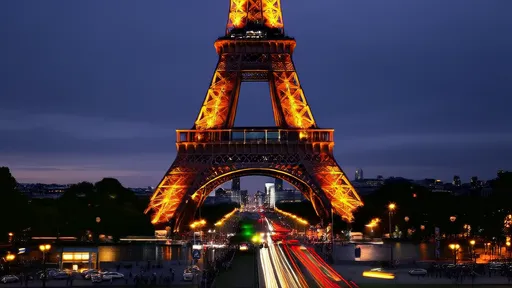
The Eiffel Tower at night is one of the most photographed landmarks in the world, yet capturing its magic in a fresh and unique way remains a challenge for many photographers. While the classic shots from Trocadéro or Champ de Mars are undeniably beautiful, there’s something thrilling about discovering lesser-known vantage points that offer a new perspective on this iconic structure. Combined with the art of long exposure, these hidden gems can transform your nighttime shots into breathtaking works of art.
Venturing beyond the usual tourist spots is the first step to creating standout images of the Eiffel Tower. Most visitors flock to the same crowded areas, resulting in repetitive compositions. Instead, consider exploring quieter neighborhoods like Passy or the banks of the Seine near Pont de Bir-Hakeim. The latter, in particular, provides a stunning frame with its iron arches, adding depth and leading lines to your shot. Another underrated location is the rooftop of Galeries Lafayette Haussmann, where you can capture the tower amidst the Parisian skyline, bathed in the warm glow of city lights.
Long exposure photography is the secret weapon for elevating your Eiffel Tower shots from ordinary to extraordinary. As the tower’s lights twinkle every hour after sunset, a well-executed long exposure can turn those fleeting sparkles into a mesmerizing golden web. To achieve this, a sturdy tripod is non-negotiable—Parisian cobblestones and riverbanks are unforgiving to shaky hands. Set your camera to manual mode, choose an aperture between f/8 and f/11 for sharpness, and keep the ISO low to avoid noise. Experiment with shutter speeds between 5 to 30 seconds to either soften the Seine’s water into a glassy surface or capture light trails from passing boats.
Timing plays a crucial role in night photography, and the Eiffel Tower is no exception. The so-called blue hour, that fleeting window just after sunset when the sky takes on a deep indigo hue, creates a perfect contrast with the tower’s amber lighting. Arrive early to scout your composition, as this magical light disappears quickly. For those willing to brave late hours, shooting in the dead of night when most tourists have left can yield surprisingly atmospheric results—think moody skies and the tower standing in solitary grandeur.
What many photographers overlook are the reflective opportunities that Paris provides in abundance. Puddles after a rain shower, the sleek surfaces of modern buildings near Quai Branly, or even a well-placed mirror can double the visual impact of your Eiffel Tower image. The key is to look down as much as you look up—the most compelling compositions often come from unexpected angles. A personal favorite technique involves using a wet pavement to create an inverted reflection, turning an ordinary street into a shimmering canvas.
Post-processing is where your nighttime Eiffel Tower images truly come to life. While getting it right in-camera is essential, subtle adjustments can enhance the tower’s glow and bring out hidden details in the shadows. Pay special attention to the color balance—the contrast between the warm tower lights and the cool night sky is what gives these photos their emotional punch. Some photographers prefer to blend multiple exposures to maintain detail in both highlights and shadows, especially when dealing with the tower’s powerful spotlights.
Beyond technical considerations, the most memorable Eiffel Tower night photos tell a story. It might be a couple sharing a quiet moment on a distant bench with the tower in the background, or the play of clouds moving across the structure during a long exposure. These human elements and atmospheric conditions add layers of meaning to what could otherwise be just another pretty picture. The true magic happens when preparation meets spontaneity—when you’ve mastered your gear enough to capture those unplanned, perfect moments that Paris so generously provides.
As you explore these less-traveled photographic paths, remember that the Eiffel Tower has been photographed from every conceivable angle for over a century. Your unique vision—how you see and interpret this iron lattice against the Parisian night—is what will make your images stand out. Whether through an unusual composition, creative light painting, or simply waiting for that perfect moment when everything aligns, the opportunities for creating something extraordinary are as endless as the Paris skyline itself.
By /Jul 25, 2025

By /Jul 25, 2025
By /Jul 16, 2025
By /Jul 25, 2025
By /Jul 25, 2025
By /Jul 16, 2025
By /Jul 25, 2025
By /Jul 16, 2025

By /Jul 16, 2025
By /Jul 25, 2025
By /Jul 25, 2025
By /Jul 25, 2025
By /Jul 16, 2025
By /Jul 25, 2025
By /Jul 25, 2025
By /Jul 16, 2025
By /Jul 25, 2025
By /Jul 25, 2025
By /Jul 25, 2025
By /Jul 25, 2025